
Calcasieu Parish Release Meanings
A person is released from Calcasieu Parish custody when a specific agency ends or changes its hold on that booking. The event may be a direct return to the community, but not always. Calcasieu Parish Sheriff's Office records can also show movement to another jail, Louisiana Department of Public Safety & Corrections custody, a hospital, court, a federal authority, or immigration custody. That is why a name disappearing from the CPSO roster is a prompt to check, not proof that the person went home. The record must identify the releasing authority, reason, time, and destination.
Calcasieu Parish released inmates can leave after bond, recognizance, time served, sentence expiration, dismissal, probation, parole, or another court order. A transfer closes one agency's custody while confinement continues elsewhere. Parole ends prison confinement but begins supervised sentence service. Probation can follow a suspended or split sentence and may not involve prison at all. A discharge is different again: it records the end of the relevant sentence or custody obligation. These distinctions determine which office holds the next useful record.
- Time served
- Credit satisfies the custody portion imposed by the court; it does not mean acquittal.
- Parole
- Release from incarceration to serve the balance under supervision.
- Probation
- Court-ordered supervision, often tied to a suspended or split sentence.
- Discharge
- The recorded completion of the relevant custody or sentence status.
- Detainer
- A request by another authority to receive or continue holding the person.
Calcasieu Parish Release Routes
The wording in a Calcasieu Parish release record matters. A bond release leaves the criminal case open. A dismissal may end a charge, yet it does not state the jail's exact door-out time. Transfer language normally means the person did not enter the community. A DPS&C sentence can also place legal custody with the state while the person remains housed in a parish building for a time. Read the agency, booking, and destination together.
| Release entry | Meaning | Next place to verify |
|---|---|---|
| Bond or recognizance | Detention ends while the case can continue | CPSO release record and court minutes |
| Time served or sentence complete | The stated parish custody term is satisfied | CPSO Records and sentencing court |
| Parole or probation | Community supervision follows custody or sentence action | LAVINE and the assigned P&P district |
| Transfer | Custody moves to another facility or agency | Receiving agency's locator or records office |
| ICE or federal pickup | Parish custody ends, but another authority may hold the person | ICE, BOP, federal docket, or USMS records |
The phrase “released by CPSO” should therefore name the destination when one exists. It may mean released to the community, transferred to Louisiana custody, or delivered to another authority. The CPSO record is the strongest local source for that distinction. Court records explain the order or sentence, while the receiving system shows what happened next.
Calcasieu Bond Release Timing
CPSO states that bond is normally attached to a charge within 48 hours. That statement is not a promise that every person leaves within that period. Several charges, another warrant, a probation hold, payment processing, a surety issue, or a detainer can keep a person in custody. The CPSO corrections FAQ also uses the phrase “72-hour court” for a Right to Counsel Hearing. It is not a rolling list of Calcasieu Parish releases.
A bond is a custody event, not the final result of the prosecution. The court docket may show bond action while the charges remain pending. CPSO Court Records & Bonds processes criminal bonds taken in the parish and maintains defendant papers and court dispositions. When the precise release time matters, pair the court entry with the CPSO booking and release record. Do not label a bond release as a dismissal, completed sentence, or closed case.
Note: Bond on one count does not compel release when another charge, sentence, warrant, or detainer remains active.
Calcasieu Parish Release Record Fields
A useful release record ties the event to the correct person and booking. CPSO's live public roster does not display this historical event. It shows current custody data, charges, photographs, and a notification route. The underlying record should be requested when a person has dropped from the roster and the exact outcome matters.
| Field | What it establishes |
|---|---|
| Legal name, aliases, DOB, person ID | Identity and the booking being matched |
| Booking date and time | The start of the relevant parish custody episode |
| Release date and time | When CPSO recorded the custody change |
| Release type or reason | Bond, time served, court order, transfer, or another coded result |
| Releasing authority | The court, agency, or sentence basis connected to the event |
| Destination or receiving agency | Whether the person entered the community or another custody system |
| Sentence expiration entry | The calculation administered for a parish sentence |
| Booking photograph | The image associated with that custody record, if disclosable |
Court minutes add the legal history: charge, plea, verdict, sentence, modification, dismissal, probation, or completion. Louisiana DPS&C records use the separate term “discharge date” for state custody history. A projection is not a discharge. The former estimates a future date under current calculations; the latter records an event that occurred.
Request Calcasieu Parish Release Records
Submit a narrow request through the CPSO public-records portal. Ask for existing fields instead of asking the custodian to research a legal question or calculate a new date. Include enough identity data to separate similar names. CPSO has not published a fixed production charge or universal completion time on the accessible request page, so ask for an estimate before copies are made.
- Identify the person by full legal name, aliases, date of birth if known, and CPSO or booking ID.
- Give an approximate arrest or booking range and name the likely CPSO facility.
- Request the booking summary plus release date and time, release reason, authority, and destination or receiving agency.
- Add the sentence-expiration entry and booking photograph only when those existing records are relevant.
- Ask for electronic copies, a fee estimate, and a written statutory basis for any withheld portion.
5400 E. Broad St.
Lake Charles, LA 70615
337-491-3642
Main office: 337-491-3700
Louisiana law generally permits free inspection and reasonable or posted copy fees. If disclosure is denied, the custodian must state the exemption basis in writing within five business days. An immediately available record is presented immediately under R.S. 44:33, while an actively used record can be certified for access within three business days. These rules are not a promise that every request will finish in three days.
The CPSO Corrections page describes the Records Department's role in parish release and expiration calculations. The official page shown below helps explain why that unit, rather than a live roster alone, is central to a Calcasieu Parish release record.
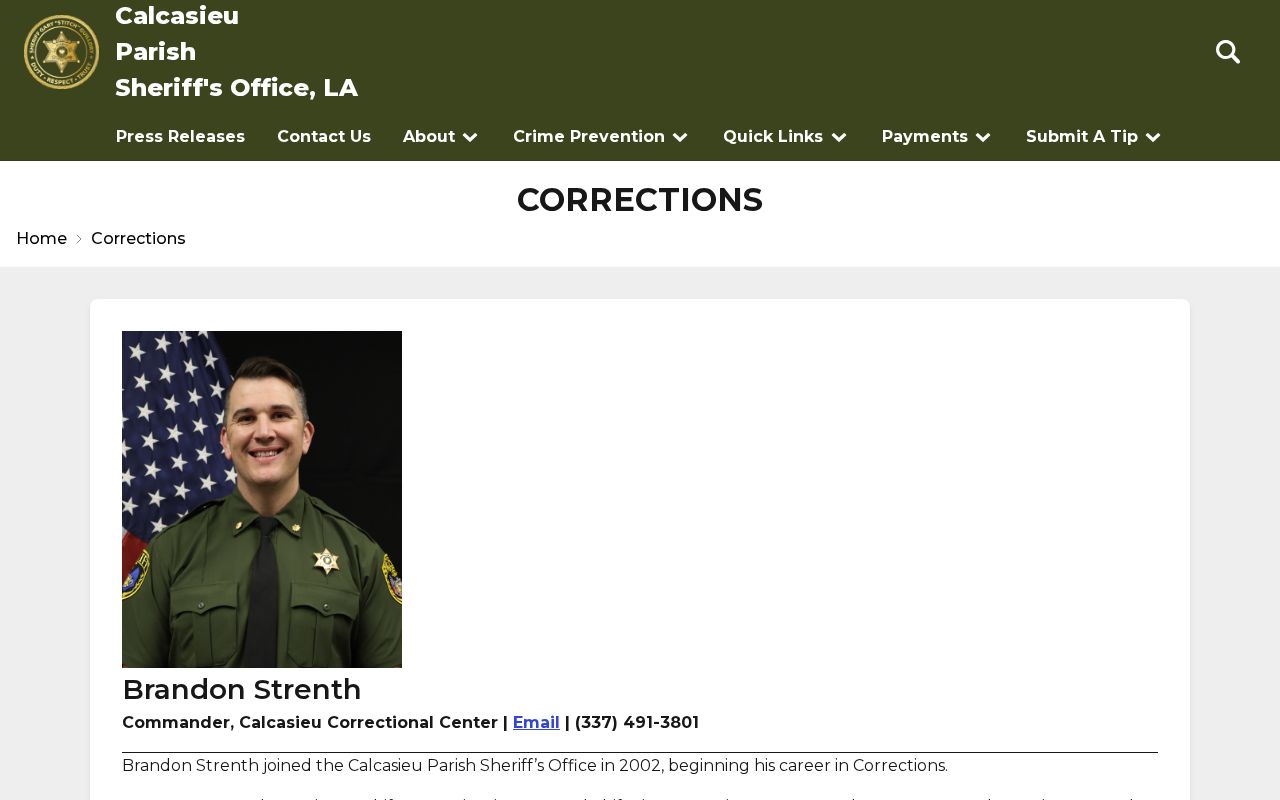
That records function connects the jail booking to sentence administration, court communication, release timing, and agency transfers.
Calcasieu Parish Record Access Laws
Louisiana R.S. 44:1 broadly defines public records. R.S. 44:3 permits withholding certain pending investigative material, but it preserves access to specified initial reports, booking records, citations, and filed bills of information, subject to other protections. Code of Criminal Procedure article 228 describes an open booking summary with identity, booked date and time, charges, arresting person, property or address data, brief facts, and co-arrestees. It does not promise that every photograph will be released.
Restrictions still apply. Juvenile, sealed, expunged, victim-identifying, medical, confidential-source, security, and protected investigative material may be withheld or redacted. Ask for the segregable public parts and the legal reason for each denial. Retention is also different from web display. R.S. 44:36 generally creates a three-year floor where no other schedule controls and requires adult DPS&C records until six years after full-term expiration or death, whichever comes first. A live roster can stop showing a person long before those underlying records cease to exist.
Calcasieu Release Records After Expungement
The Calcasieu Clerk's expungement instructions show why a once-visible record can later become unavailable. The local process calls for arrest dates, arresting agencies, docket numbers, sentencing minutes, and proof of completion. It may take up to eight months. The cited local materials list an ordinary total of $550 across State Police, Clerk, CPSO, and District Attorney components, but current amounts should be confirmed before filing.
Expungement concerns lawful public visibility, not a new release event. It does not authorize anyone to bypass a seal, use a restricted juvenile path, or infer why a result is missing. A blank search may also stem from the wrong court, an indexing delay, an older archive, a recent filing, or a city-court case. Keep those possibilities open until the correct custodian responds.
Note: Missing public data does not establish that a person was never booked, remains confined, or received an expungement.
Find Calcasieu Parish Released Inmates
Begin with a full legal name, aliases, date of birth, approximate booking date, arresting agency, and any CPSO, DPS&C, BOP, FBI, or immigration number. A name alone is weak evidence. The fastest local sequence starts with the CPSO current roster, then follows the person into LAVINE, the CPSO release record, and the correct court docket. Each step should use the same identity details.
- Search the CPSO roster. An `IN` result means the person is currently listed, subject to update delay.
- If the former entry is absent, search Louisiana VINELink and read the exact release, transfer, location, or supervision wording.
- Call CPSO Corrections or request the release record for the date, time, reason, authority, and destination.
- Search the 14th Judicial District Court case history and minutes for bond, dismissal, sentence, amendment, or completion.
- If a state sentence appears, continue with DPS&C. If federal or immigration custody appears, switch to BOP, the federal docket, USMS records, or ICE.
No official CPSO rolling release list was located. The pages for people released last 24 hours explain the same-day fallback without presenting the roster as a release feed. For one named person, the agency record and court trail remain the sound route.
Louisiana Search for Calcasieu Releases
The Louisiana Department of Public Safety & Corrections directs public searches to LAVNS through VINELink. The service covers imprisoned people and people under probation or parole. It can be searched by location, name, or ID/case number and is updated every 24 hours. Read the exact custody, location, and supervision language. A community-supervision result supports that prison incarceration ended while the sentence continues. An unmatched name proves little because spelling, identity, timing, and archive limits can intervene.
| Search field | Use | Caution |
|---|---|---|
| Name | Start a broad identity search | Confirm DOB or an ID where available |
| ID or case number | Reduce same-name matches | Use the agency's own number format |
| Location | Narrow a current facility or office | A prior location may vanish after transfer |
| Custody or supervision status | Distinguish prison from community supervision | Do not rewrite a transfer as release |
| Projected release date | Shows an estimate when applicable | It is not an actual discharge date |
The automated Imprisoned Person Locator at 225-383-4580 is available around the clock. It requires the DPS&C number or a name plus date of birth, and may state assigned facility, facility contact, and the exact field “projected release date (if applicable).” Time-computation questions go to 225-342-0799. For an old record that is no longer easy to find online, request the discharge date and general sentence information from DPS&C under R.S. 15:574.12(G)(1)(a).
The DPS&C inmate information page explains that statewide search coverage and refresh schedule.
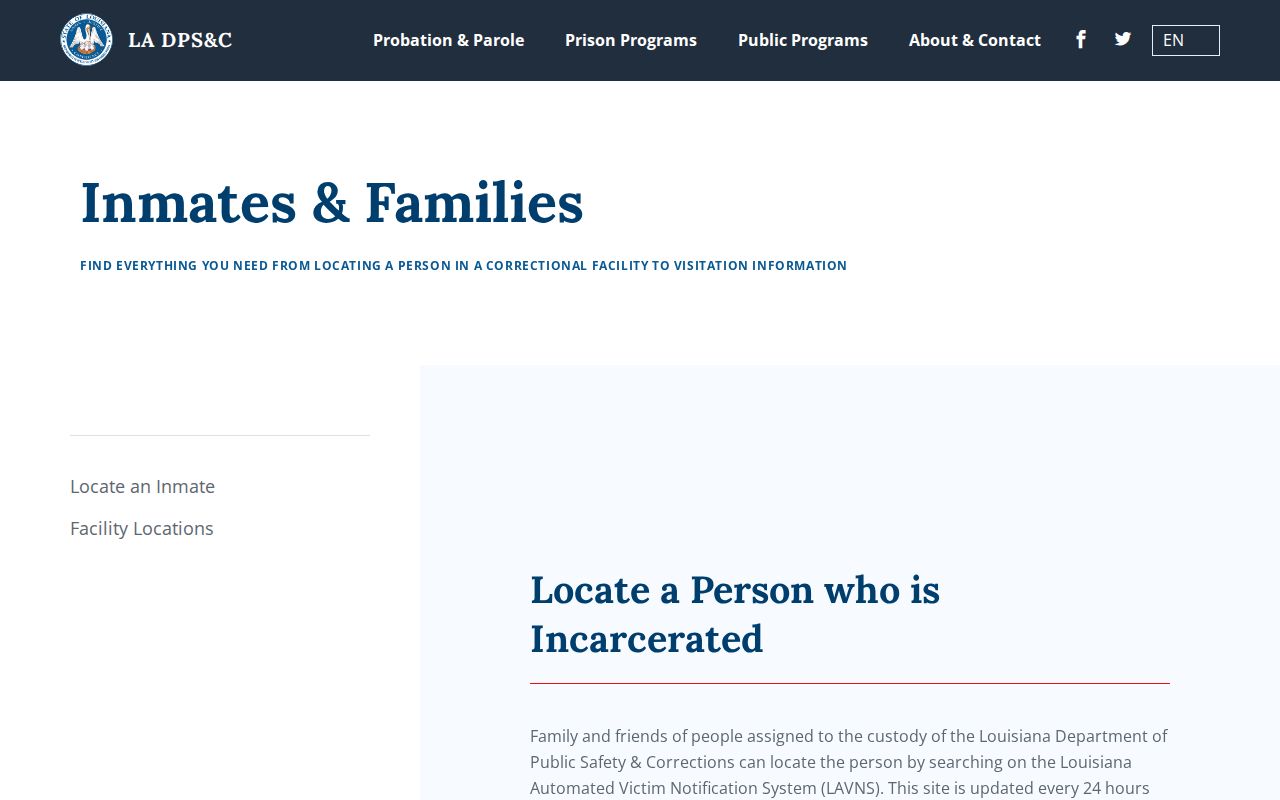
The state source is the right next step after a Calcasieu Parish detainee receives a state sentence or appears under community supervision.
Calcasieu Release Alerts and Registry
Louisiana calls its public victim-information network LAVINE, while some DPS&C material uses LAVNS. It covers adults in parish jails and state prisons and can send notice of a release or facility transfer. Search the correct person in VINELink, open the matched record, and select the offered telephone, text, email, app, or TTY channel. A telephone registration uses a private four-digit PIN to confirm receipt when the system calls. The PIN is not an inmate ID. Louisiana assistance is available at 866-528-6748.
A transfer notice does not mean community release. Read the event wording and search the receiving system. Automated notices can also lag, so request the CPSO or DPS&C record when the exact time, type, and destination matter. Formal DPS&C Victim Outreach is a separate state program that can cover projected and actual state release plus parole or pardon events for eligible registrants. A local or public LAVINE registration should not be assumed to carry into that formal program.
The Louisiana and Calcasieu registry form a narrow additional channel. A registry result may persist after custody or supervision when a statutory registration duty applies. Most released people will never appear there, and an absent result says nothing about ordinary Calcasieu Parish released inmates. Date any registry result because public address and compliance data can change.
Calcasieu Release Clues in Court
The Calcasieu Clerk serves the 14th Judicial District Court. Its Criminal Index, Case History, and Minutes can preserve bond, plea, verdict, dismissal, sentence, probation, amendment, and completion events after a jail entry is gone. Search the defendant, then confirm the docket and arrest date before relying on a page. Online copies cost $1 per page under the cited July 2025 update and are not official; the records held in the Clerk's office are official.
Two local wording traps matter. The Clerk's phrase “released records” means documents indexed and released for public viewing, not defendants released from custody. The 14th JDC search also does not replace Lake Charles City Court or Sulphur City Court when a charge began there. Older criminal records may require Archives. Criminal Records at 1000 Ryan Street can assist on weekdays from 8:30 a.m. to 4:30 p.m. at 337-437-3558.
The Clerk's online-services instructions identify the case-history and minutes route.
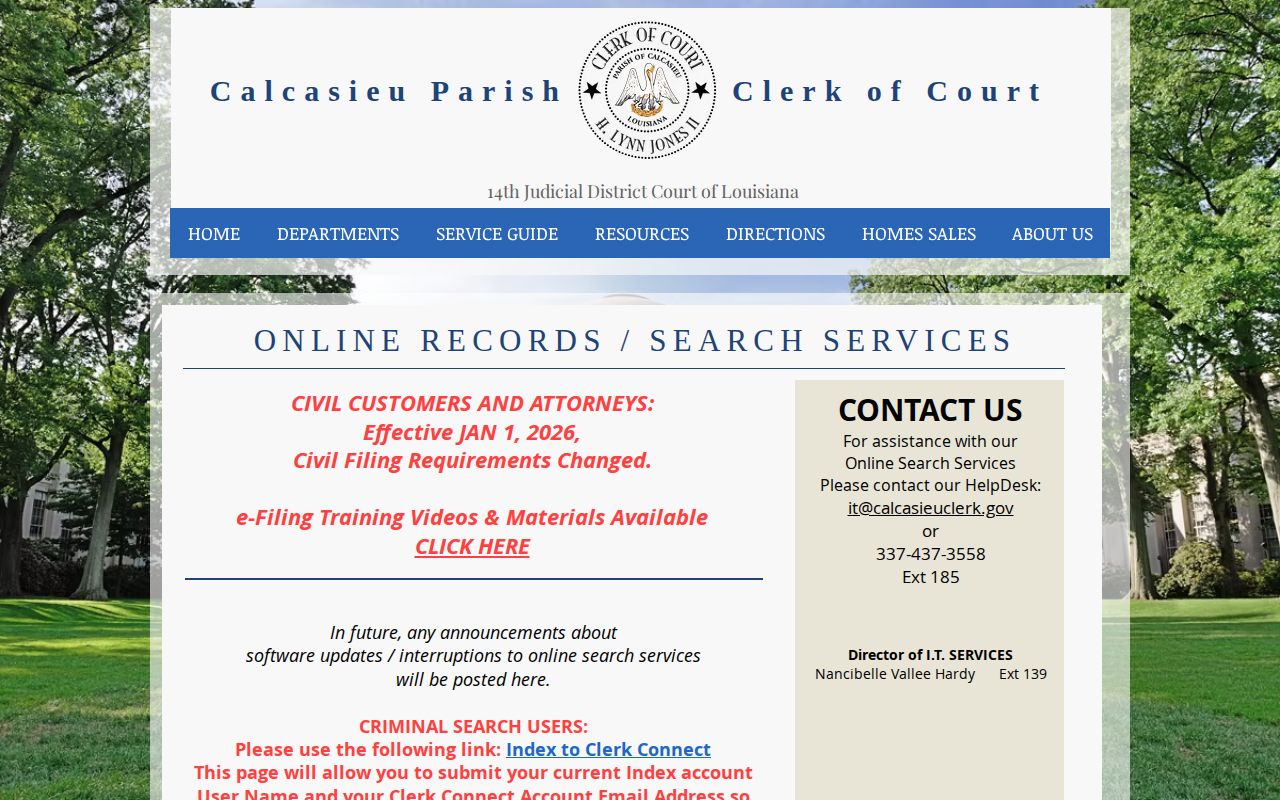
Use a certified minute when proof of the court's order or sentence is needed, then use the jail record for the operational release time.
Calcasieu Release Programs
A person released from incarceration may remain under Louisiana probation or parole. LAVINE can show a community-supervision status, and the state locator may identify the assigned district. The Lake Charles Probation and Parole District serves Calcasieu, Cameron, and Jefferson Davis parishes. DPS&C reports that about two-thirds of its supervisees live in Calcasieu Parish, and the district handles many interstate matters because of the Texas border. That assigned office may therefore reflect more than a simple home-address assumption.
CPSO documents pre-release programming for sentenced people returning to the community and a Transitional Work Program through contracted residential providers. Other programs include substance-use education, literacy, life skills, AA/NA, and prison ministry. These can support community return, but enrollment or completion does not verify that a named person was released. The custody record must still show the actual transition.
For the status and office-verification path, use the dedicated Calcasieu Parish parole and probation record information. A warrant or absconder status can mean someone is physically outside confinement while still legally noncompliant, so “not in jail” is not the same as discharged.
Calcasieu Reentry Transit After Release
Calcasieu has a distinct practical resource for people under DPS&C supervision. The Reentry Transit Program schedules rides for essential appointments such as probation and parole reporting, court, medical care, classes, and groceries. General rural service asks for 48 hours' notice, works first-come and first-served, and can involve fees. It is not an on-demand ride from a jail gate.
No official jail-gate transportation policy was located. A person seeking the parish service should call 337-721-4040, confirm eligibility and schedule, and avoid assuming a ride will be waiting when custody ends. The program helps with post-release access to required services. It does not prove that an individual left custody or identify the release destination.
Digital Mail After Calcasieu Release
CPSO documents an unusual post-release path for digital correspondence. A former detainee can sign in to SmartInmate to retrieve messages and photographs that arrived through the jail's scanned-mail and kiosk system. This instruction concerns stored digital mail. It is not proof that the person was released, and it does not establish any rule for collecting physical property.
No official source located a Calcasieu jail-gate transportation rule, a family waiting area, a fixed gate payment, or a physical-property pickup procedure. Those gaps should remain gaps. Contact the facility or CPSO Records for a specific operational question instead of assuming a practice used by another parish. The documented digital route can help a former detainee recover correspondence without turning it into a broader release claim.
Note: SmartInmate access can recover digital messages and images, but it does not authenticate a release date or destination.
Calcasieu Release to ICE
An ICE detainer can turn one release into two separate custody events. ICE asks a jail for notice of an impending release and for up to 48 additional hours so officers may assume custody. A CPSO record may therefore truthfully show that parish custody ended even when the person did not return to the community. The destination or receiving-agency field is crucial.
Search the ICE Online Detainee Locator by nine-digit A-number plus country of birth, or by exact name and country of birth with date of birth to narrow the match. ICE states that it can cover current detainees and people released from ICE within the prior 60 days; it excludes minors and can omit other records. A negative result is not proof. The Detention Reporting and Information Line is 888-351-4024 on weekdays from 8 a.m. to 8 p.m. Eastern, excluding holidays.
Federal criminal custody uses a different route. The BOP locator can show a past release date and the terms “Released” or “Not in BOP Custody,” but those statements address BOP custody only. Federal supervision, ICE, state custody, or another authority may follow. A pretrial USMS detainee may require the federal court docket or a USMS records request because the Marshals Service has no comparable public locator.
The BOP source below illustrates the federal locator that applies only when the Calcasieu custody trail shows federal involvement.
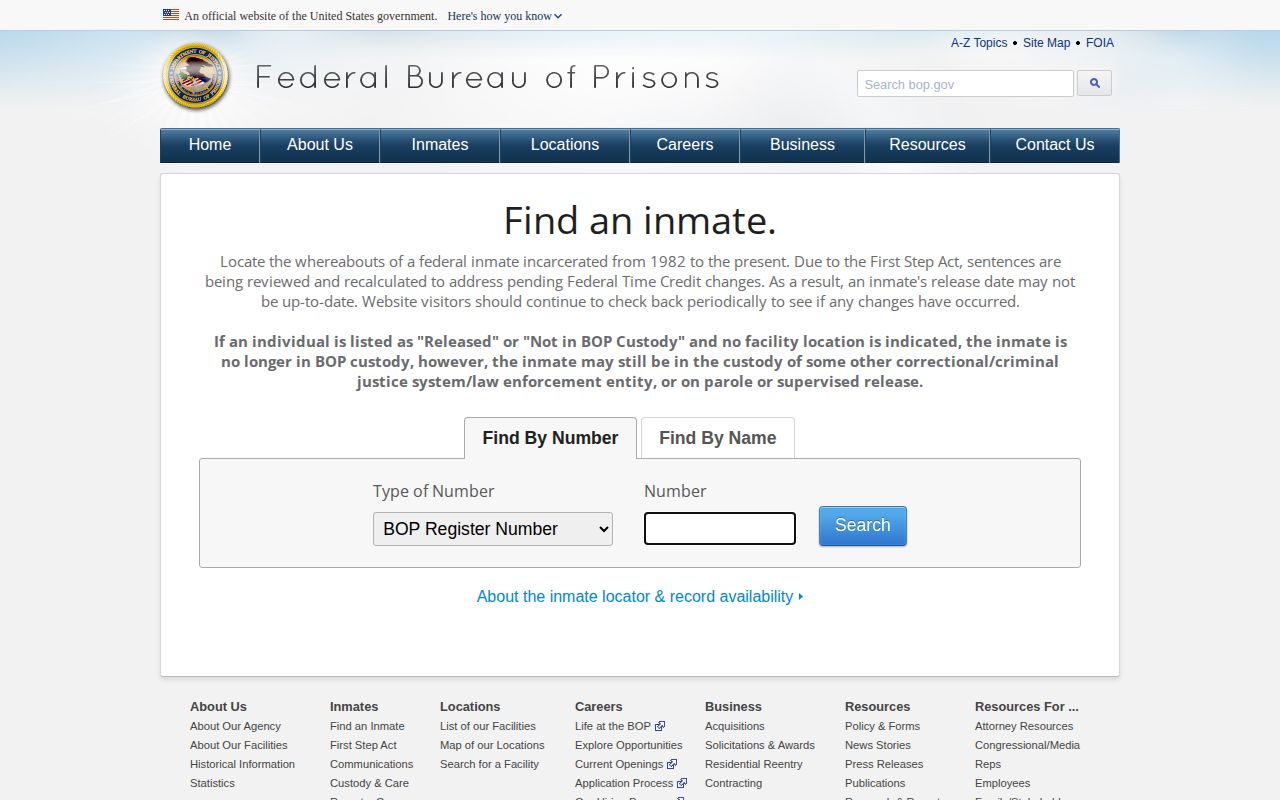
Keep the authority in every summary: BOP release, CPSO release, and ICE release are separate events with separate records.
Compare Calcasieu Release Sources
The best source depends on the stage of custody. A current roster answers a present-tense question. A release record documents an event. A supervision result describes a sentence continuing outside prison. Court minutes explain the legal action, not always the exact time the jail processed it.
| Source | What it can show | What it cannot prove alone |
|---|---|---|
| CPSO roster | Currently listed parish custody, charges, photo | Why an absent person left or where they went |
| CPSO release record | Release or transfer time, type, authority, destination | Final result of every criminal charge |
| LAVINE / DPS&C | State custody, transfer, or community supervision | A permanent certified discharge archive |
| Calcasieu court minutes | Bond, sentence, dismissal, modification, completion | The precise door-out time |
| BOP or ICE locator | The named federal or immigration custody status | Freedom from every other authority |
Is roster absence enough? No. Search the next likely system, then request the CPSO release record when the exact type or destination matters. When sources disagree, note their update schedules and ask the custodial agency to resolve the conflict.
Calcasieu Parish Release Facilities
Calcasieu Correctional Center holds people awaiting adjudication and people serving parish time. Its releases can lead to the community or to another agency. Calcasieu Sheriff's Prison is a separate CPSO facility but shares the parish roster and records ecosystem. A move between the two buildings is not a community release.
Women's Correctional Services is a CPSO annex, not a separate online release system. The adult chain remains the CPSO roster, Corrections Records, LAVINE, and the sentencing court. Calcasieu Parish Juvenile Detention Center uses a separate, restricted juvenile system. Families and counsel should contact juvenile services or the juvenile court rather than apply adult public-roster methods to a youth.
- Calcasieu Correctional Center: verify through CPSO Records, LAVINE, and court minutes.
- Calcasieu Sheriff’s Prison: confirm whether the event was a move to CCC or an actual release.
- Women’s Correctional Services annex: use the common CPSO corrections and records path.
- Calcasieu Parish Juvenile Detention Center: use restricted juvenile-agency and court channels.
No Louisiana state prison or federal correctional institution was identified inside Calcasieu Parish. A person may still enter state or federal legal custody after leaving a parish building, which makes the receiving authority more important than the building name.